General
Why Saffron Costs More Than Gold By Weight
Written by Fatima Batool
August 28, 2026
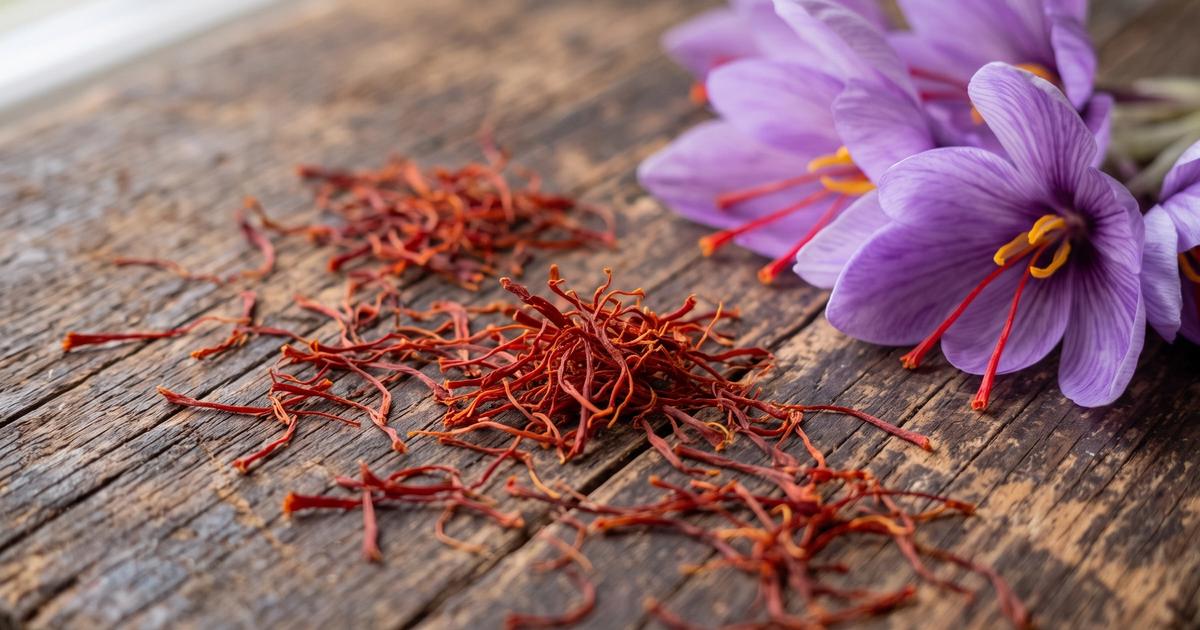
Saffron is sold in excess of U.S. $600 per ounce regularly, ranking it among the world's most costly per ounce, making it one of the world's most costly substances by weight. The stigma is the biological source of saffron, a one-of-a-kind floral part that makes it such a costly spice, as compared to other spices, which come from seeds, bark, or roots.
A genetic mutation created the plant
According to researchers, saffron is derived from the crocus sativus plant, which is thought to have evolved from a single wild crocus that developed a seed that contained an extra set of chromosomes. This mutation led to the formation of a flower with some unusually long stigmas that are especially rich in three compounds: crocin, responsible for the unique red color of saffron, picrocrocin, giving it its unique flavor, and safranal, which accounts for its hay-like fragrance.
The plant is also sterile due to the same mutation that made it valuable. It only lives through its corm, an underground stem-like structure that can be separated and replanted to produce new plants. All commercial saffron crocuses planted today are genetic clones of the original mutant plant and have been propagated vegetatively, handpicked, and multiplied over a period of thousands of years.
A History Spanning Multiple Ancient Civilizations
The plant is probably of Greek origin, as there are frescoes of women picking the spice from more than three and a half thousand years ago. The cultivation of saffron in Iran (nowadays) goes back at least 3,000 years. Ancient Persians used it as a food and in perfumes and in dyed fabric. Saffron was said to have been used in the 4th century BC by Alexander the Great in his treatment of battle wounds. Saffron was used as a diplomatic gift among Islamic rulers as early as the 9th century and figured in the Persian medical book of Ibn Sina (c. 1025 CE) for treating a wide variety of ailments such as depression and inflammation.
The medicinal history of saffron has been debunked, for example, for its use to cure the plague in 14th-century Europe. Saffron, however, has been proven to have measurable anti-inflammatory and antioxidant properties, a claim that cannot be made of most of the remedies of that time period.
Other surprisingly valuable objects have vanished from public view, as covered in Six Priceless Artifacts That Vanished Into Private Hands.
The Labor Behind Every Gram
The sole determining factor in the cost of saffron is the method of production. The crocus flower blooms for about 2 weeks a year, and almost all the labor involved in harvesting saffron is done during this small period of time. The flowers are picked by hand at dawn, before they have fully opened, to ensure their potency and to prevent wilting. The stigmas on each flower are then hand processed, removing three stigmas, and they are dried to make the finished spice.
It takes 150,000 individual flowers to produce 1 kg of dried saffron, which equals more than 400 hours of manual work. The plant is a sterile clone and cannot be selectively bred for increased yield like most agricultural crops have been over the generations, and as a result, labor-intensive, low-yielding harvest has not changed significantly over thousands of years.
Why the Price Has Never Come Down
Over time, as a result of breeding and improved farming methods, most crops get cheaper as they yield more per plant. Saffron has been largely left out of that process, however, because it is sterile and cloned. Researchers are now trying to create new mutations to produce higher yields, but unpredictable harvests from increasingly unstable growing conditions have placed additional pressure on an already precarious supply chain relying on the same genetic line for thousands of years.