General
8 Facts About Diamonds That Sound Made Up But Are True
Written by Fatima Batool
August 23, 2026
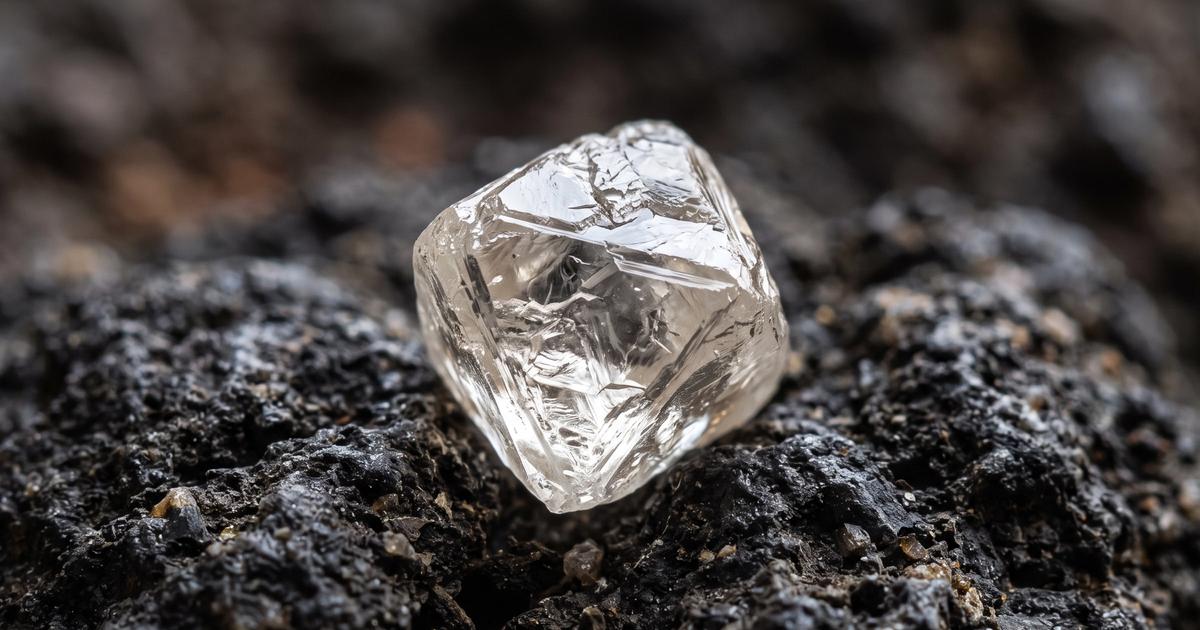
The vast majority are familiar with diamonds as polished jewellery, yet the science of diamonds is more baffling than the marketing behind them. Here are eight facts, which stand up to scrutiny.
They Are Chemically Identical To Pencil Lead
Graphite and a diamond are both made out of carbon. The only difference is in the arrangement of the atoms. Graphite is a structure of carbon atoms in sheets that slide around easily, and this is why a pencil can be drawn on paper. Those atoms form a fixed three-dimensional structure in a diamond. There is no addition or subtraction between the two forms. The two-cent pencil and the stone can be priced thousands of dollars apart, just because of the arrangement.
They Form About One Hundred Miles Underground
Most natural diamonds crystallise in a thin layer in the earth's mantle down about 100 miles from the surface, where it's about 2200°F and the pressure is over 700,000 pounds per square inch. In that environment, the carbon atoms are forced into a rigid crystal lattice. The rare and violent volcanic eruption needs to be strong enough to push the material up before it cools down and turns back to ordinary graphite.
Diamonds Can Actually Catch Fire
Although diamonds are sold as "indestructible", they are in fact flammable, as they are composed of pure carbon. If a diamond is exposed to sufficient oxygen at approximately 1500 degrees Fahrenheit, it will start to burn and turn to carbon dioxide gas. Firefighters have reported house fires where the diamond in a ring was found, but the ring itself was intact. In both of those cases, there was no evidence of anything missing to explain where the diamond went.
Other supposedly rare treasures have stranger stories, like Why Saffron Costs More Than Gold By Weight.
They Are Not Actually Rare
Although the price is high, diamonds are not geologically scarce. Large deposits are found on many continents, and a number of mines remove millions of carats annually in the Russian Federation, Botswana and Canada. Much of this was done on purpose by major diamond companies as they control the quantity of diamonds entering the open market for decades to artificially inflate prices. The price is more indicative of market control than of rarity.
Lab-Grown Diamonds Are Chemically Identical to Mined Ones
Lab-grown diamonds produced by high-pressure, high-temperature synthesis have the same chemical makeup and physical characteristics as natural diamonds. It is impossible to tell them from mined diamonds just by looking at them, and special gemological instruments are needed to differentiate them. Lab-grown diamonds have been becoming increasingly popular over the last ten years, as they are more inexpensive to manufacture and do not have the same environmental impact as mined diamonds.
The Rarest Natural Colour Is Red, Not Blue or Pink
Natural diamonds come in a variety of colours beyond the clear variety, such as yellow, blue, green and pink, which are the result of impurities or flaws that formed during the diamond's creation. Trace quantities of boron are responsible for the blue colour of blue diamonds, while traces of nitrogen impurity colour yellow. The rarest of all, red diamonds are coloured by a distortion of the crystal structure itself and not by any chemical impurity. There are fewer than 30 natural red diamonds known.
Some Diamonds Are Older Than Complex Life on Earth
Most of the natural diamonds were produced between one and 3 billion years ago, long before complex life in the oceans of the planet. The mineral fragments are very rare in only a few specimens, dating back to more than four billion years, near the earliest time of the Earth's history. The ancient stones provide scientists with physical evidence of the earth's crust from a time when most other geological evidence has been wiped away.
The Engagement Ring Tradition Was Created By An Ad Campaign
Diamonds as engagement rings weren't commonplace before 1947, when a large diamond company introduced the saying "a diamond is forever". Coloured gemstones had as much use in engagement rings as well before that campaign. It remains one of the most successful marketing campaigns of the 20th century and is credited with ensuring that diamonds were the expected gift in the decades that followed.
Why This Matters Beyond Trivia
These facts change the understanding that the diamond industry should be. Rarity or indestructibility is not the main reason for the value of a diamond, but rather decades of coordinated marketing and supply control. Knowing the real chemistry and geology of these stones will make it more straightforward to distinguish natural rarity from created demand when assessing the true worth of a diamond.