General
Six Facts About Magnets That Sound Fake But Are Real
Written by Fatima Batool
September 3, 2026
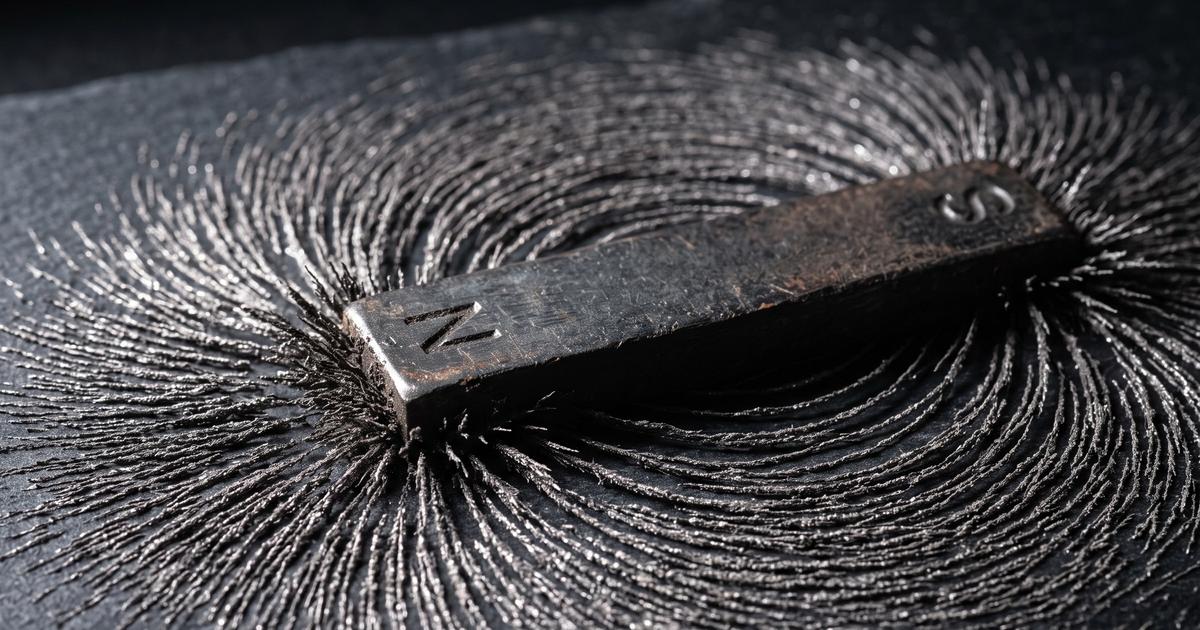
Most people don't think about the way magnets function, because they are used in just about everything we use every day. These six facts about magnetism will stand the test of both real physics and real biology research.
The Earth Itself Is A Giant Magnet
The earth has a magnetic field, which extends into the space around it, and is produced by a layer of molten iron that churns in the earth's core. This field is like a barrier, blocking the solar wind that would otherwise blow away the atmosphere. Mars offers a good comparison: billions of years ago it cooled down, its core ceased moving, its magnetic field decayed, and its atmosphere was slowly blown off by unshielded solar wind. That's because the core of the Earth is constantly moving, which has stopped it from happening here.
Magley Trains Levitate With Zero Wheel Contact
The maglev train in Japan is a train that levitates entirely above the track without making any physical contact with it, thanks to the use of superconducting magnets. In 2015, a test version reached speeds of 603 km per hour. China is already running a commercial maglev line in Shanghai that exceeds 430 km/h top speed and reduces an otherwise lengthy commute to just a few minutes. There is no resistance other than air opposing the train at this time.
You Cannot Physically Isolate a Single Magnetic Pole
No matter how many times a magnet is cut, it will always have a north and south pole. When a magnet is broken in half, the two resulting parts don't become a north pole and a south pole. Rather, each half becomes its own full magnet, having both poles intact. The existence of isolated single magnetic poles (monopoles) has not been found by the physicists since the 1930s and is still not known if they exist or not.
Invisible forces shape space itself, as explored in Space Facts That Will Leave You Speechless: 7 Real Cosmic Threats
Magnetic Fields Are Used To Generate Nearly All Electricity
All nuclear, wind, and hydro power plants work in a similar way: by rotating magnets within coils of wire to create electric currents. The energy source is different for each, but the process first demonstrated by Michael Faraday in 1831 has remained the basis for today's electric power system.
Salmon Navigate Using Earth's Magnetic Field
Salmon hatch in a particular river, spend several years up to thousands of miles in open ocean, and then swim back to the same river they hatched in to spawn. Scientists have discovered that the distinct magnetic signature from a salmon's birth stream gets "stamped" into its brain, serving as a magnetic reference point for the salmon. This memorized signature helps the fish find its way back over vast tracts of open water where it cannot see anything.
Homing Pigeons Have Magnetic Crystals In Their Beaks
Homing pigeons can be sent away from an unfamiliar area hundreds of miles away and return there with remarkable accuracy. Scientists found that this feat was due to tiny magnetic crystals in the pigeons' beaks that are sensitive to the earth's magnetic field and act as a biological compass. By attaching small magnets to the birds, scientists were able to disrupt this signal, causing the pigeons to always lose their way. By attaching small magnets to the birds, scientists could interfere with the signal, causing the pigeons to always lose their way, thus proving the mechanism experimentally.
Why This Matters Beyond Trivia
The examples demonstrate that magnetism is not a phenomenon limited to refrigerator magnets and compasses. It is the foundation of protection from the sun's radiation, for large-scale power generation, as well as for high-speed transport and even for biological navigation systems that have evolved over millions of years. Once people grasp these mechanisms, it is easier to appreciate what magnetism is and how it is one of the basic forces that influences systems they never think about.