Lifestyle
Ancient Japanese Wood Charring Method That Stops Fence Posts From Rotting
September 4, 2026
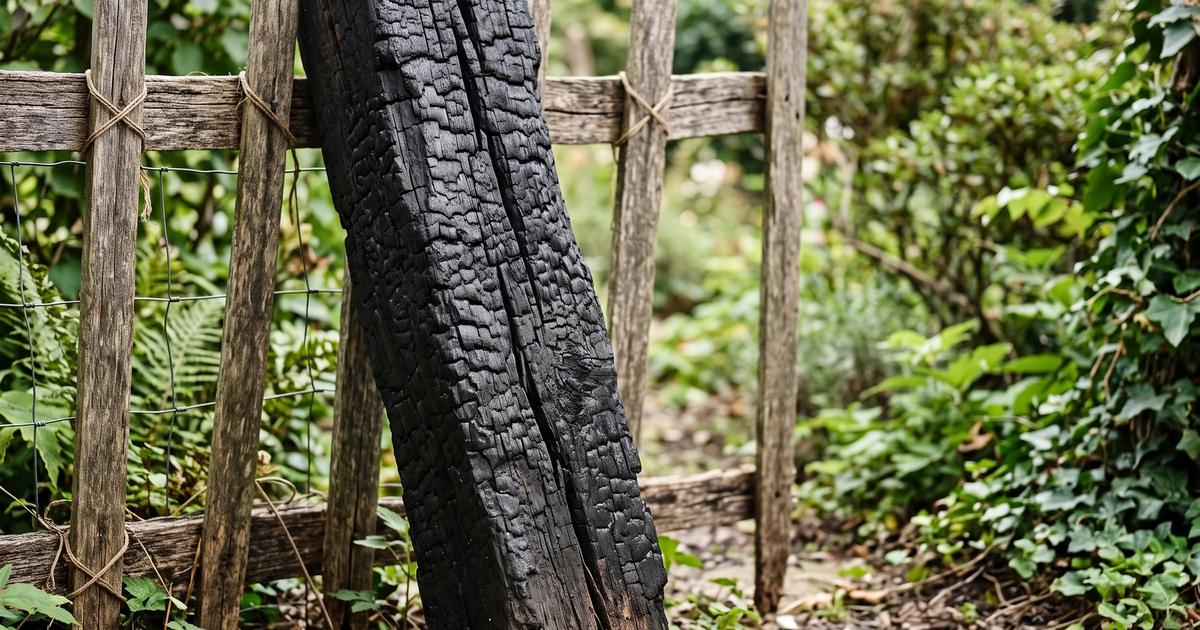
Wooden fence posts do not tend to decay at the bottom or the top. They die at the soil level, where a thin layer of wood remains perpetually wet from rain overhead and water moving up from the soil. It's there that the fungi consume the sugars in the wood, and that's why nearly all undecayed wooden posts fail to withstand the elements and snap at the base. The Japanese woodworking method of yakisugi (burnt cedar) is a solution that directly attempts to fix the issue with nothing but fire, oil and tree resin.
Where the Technique Originated
Historical records report that Japanese fishermen saw that after a fire in the docks, some planks in the boat did not suffer damage from saltwater corrosion and did not become infested by marine borers that could be found in similar hull wood in just a few years. From there, the art of intentionally burning wood was adopted and made a common way to preserve the exterior of houses and structural wood from humidity and rot.
Why Burning Wood Actually Prevents Decay
Wood consists of cellulose and hemicellulose, long chains of sugar bound together by a special compound called lignin. Those sugars are food for wood-destroying fungi, termites and other wood-destroying organisms. Conventionally, sugars are removed from the outermost layer of wood by burning it in a controlled manner to leave a thin shell of pure carbon about a quarter of an inch thick. Carbon will not rot and will not provide nutrition to fungi or termites. The heat also seals and hardens the wood surface pores, which cuts the amount of water absorbed by an estimated 80 to 90 per cent: this is important, as water intrusion is the first step in the rot process.
How the Charring Process Works
It is charred with a propane torch or open flame in the section of post that will be buried along with a few extra inches above ground level to accommodate seasonal variations in soil moisture. This is done by allowing the wood to catch fire evenly and form a deep black, cracked texture on the surface, sometimes likened to alligator skin. Immediately, the char is quenched by water at that time to prevent the burn from progressing too deeply. There is potential for over-charring: the wood should not be seen to be shrinking, or the corners of the post should not be starting to come loose; then it has been burnt too much and will not support the structure. This technique would only work for new or structurally sound wood. Charring of an already rotten post will not repair existing rot.
Sealing The Char With Linseed Oil
A charred surface is not sufficient. There are also small cracks in the carbon shell and open pores which need to be filled and sealed, and boiled linseed oil is used for this purpose. Linseed oil is a drying oil, meaning that it doesn't lie on the surface, but rather it undergoes a chemical reaction with the air and hardens within the wood fibres, making it part of the wood structure and not a covering that can peel off or hold moisture in the wood. Usually two or three applications are made, and particular care is taken in the cut end of the post, as this is the fastest to absorb groundwater.
A word of caution: linseed oil-soaked rags may catch fire as the oil dries, even in the absence of any flame or spark. Never throw used rags in a ball-up form. Always dry or soak up used rags laid flat.
The Final Layer: Pine Tar
A final protective coat of genuine pine tar, also sometimes referred to as Stockholm tar, is applied by brushing it on the oiled and charred surface. Usually diluted to about 50% with extra linseed oil to aid in flow and penetration. Real pine tar will stay slightly flexible; wood naturally expands and contracts with the change of temperature and moisture, and real pine tar will move with the post; this is unlike petroleum-based roofing tar or driveway sealer, which will split away from the post over time.
How The Post Is Set Also Matters
Proper installation makes the treatment more effective. The soil or concrete at the base should be piled up around the post and sloped off away from the post instead of being left dished in, as it would create standing water right on the treated wood. Any water that gets to the bottom of the posthole has somewhere to go and nowhere to go, which is against the thirsty end grain, so placing a layer of gravel at the bottom of the posthole prevents water from being held in place against the end grain. The end grain of the top of the post is just as prone to absorbing water as the bottom, so a small angled board on top is important, too.
Why This Method Became Uncommon
By the 1950s fire charring had virtually ceased to be used when a chemical wood preservative known as chromated copper arsenate was patented in 1933 and incorporated into building codes. That treatment required copper, chromium, and arsenic to be forced into the lumber during pressure treatment and became the industry standard for treated lumber, and that was the norm for decades. This species of treated lumber typically has about 20 per cent arsenic by weight, and due to concerns for arsenic contamination in the soil around treated wood structures such as playgrounds, the Environmental Protection Agency began to limit its use in residential construction in 2003.
Cost Comparison
Propane torches are about $20 and can be used over and over again. A quart of boiled linseed oil will treat a full run of fence posts for about $15 and will cover a full run of fence posts for about $20 per quart when used as pine tar. Materials are usually less than $5 per post. The cost of a standard pressure-treated post is about $25, and it must be replaced in 15-20 years; metal post alternatives can be over $100 per post.
Choosing The Right Wood
This approach can be used with most wood species, but with some wood species the starting material becomes an issue. Other species that are naturally resistant to rot (such as black locust or osage orange) work best, and cedar is also naturally rot resistant and does not require charring. Many standard pressure-treated posts can only last 25 years, while plain pine treated with this full process can last for 30-40 years. Generally, lumber with darker, heartwood colour at the ends of the wood, rather than lighter sapwood closer to the bark, will make for a more durable product in the long run.