Health
Six Japanese Sleep Habits Backed By Real Sleep Science
Written by Fatima Batool
September 3, 2026
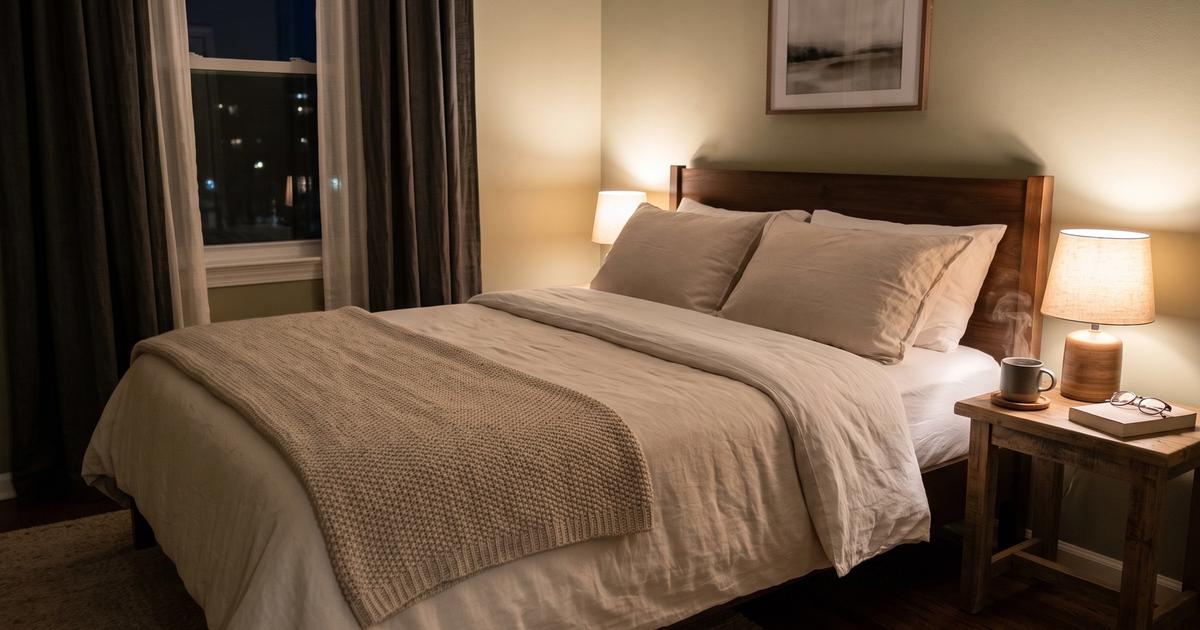
Trying to sleep more is usually not an effective strategy for resolving sleep issues. They are typically addressed by eliminating the particular things blocking your body's natural process of turning off. Each of these six habits has science behind it. There are documented sciences that relate to each of these six habits that directly target that process.
Counting Your Breath To Slow Your Nervous System
If your mind refuses to stop racing during the night, it's not the time to relax. It is regulating the number of breaths per minute. This is done by breathing out slowly through the nose, counting each breath out as you go up to 10, then repeating if you forget. The important part is the rate – the slow counted breathing lends itself to slow breathing down to approximately 6 per minute. When you're breathing at this particular rate, your breathing is synchronising with your heart's own rhythm, which is one way to measure a nervous system move to rest and recovery. This is not a simple relaxation technique. It's a straight, physiological way to activate the calming response in your body via the vagus nerve.
Warming Your Feet To Cool Your Core
You might think it's the opposite, but it's true that warming your feet before bed will help you get to sleep faster. Once your feet are warm, blood vessels close to the skin's surface open, allowing heat to escape from your body. As that heat escapes through your feet and hands, your body temperature will decrease, and decreasing core body temperature is one of the most dependable predictors of sleepiness. Studies of this particular mechanism date back to controlled studies in the late 1990s. Interestingly, one trial determined that soaking in a warm foot bath prior to sleep didn't significantly influence sleep results in older adults; however, just placing on warm socks before retiring to bed did, indeed, help older adults fall asleep about seven and a half minutes quicker, sleep around thirty minutes longer and wake less throughout the night.
Timing an Evening Bath Correctly
In a wonderful way, a warm bath or a hot tub bath can contribute to better sleep, provided it's at the right time. According to a 2019 review in Sleep Medicine Reviews, which looked at 13 clinical trials, taking a hot bath or shower (between 104 and 109 degrees Fahrenheit) that lasts at least 10 minutes, just 1 to 2 hours before you go to sleep, cuts the time it takes to fall asleep by about 36 per cent. It's similar to the foot-warming trick but applied to the rest of your body. The cooling effect of a hot bath isn't just an issue of a drop in core temperature after the bath itself; it is actually a drop in core temperature that starts during the bath and takes around 90 minutes to reach full effect.
Japanese homes also handle temperature differently, explained in Seven Japanese Cooling Methods That Work Without Air Conditioning.
Eating to About 80 Percent Full in the Evening
So, it's not just about eating to 80 per cent full; it's also applicable to sleep quality when eating to 80 per cent at dinner. A heavy, late meal increases core body temperature and will stimulate an ongoing digestive process right when your body is trying to cool off and wind down towards sleep. Taking a moderate amount of food earlier in the day will prevent this conflict from occurring at all. Also, note that alcohol, which many people use to help them sleep in the beginning of the night, actually breaks up sleep during the second half of the night and decreases the amount of dream sleep you get.
Keeping The Bedroom For Sleep Only
Lying in bed while performing tasks like working, surfing on your phone or simply worrying will make your brain think, "Wakefulness equals bed." Working, checking your phone, or lying awake worried will make your brain go AWOL with the idea of bed and sleep. The stimulus control concept is a fundamental part of cognitive behavioural therapy for insomnia (CBT-I), which was developed by Richard Bootzin in 1972 and is still regarded as one of the most effective non-pharmaceutical treatments for chronic insomnia. The basic principle is: get out. If you're lying awake and frustrated, get out of bed and move to another room; come back when you feel sleepy. Eventually, your brain associates the bed with sleep, and you stop putting it to any other use. As time goes on, your mind connects the bed with sleep, so you stop using it for any other purpose.
Taking Short, Early Naps Instead Of Long Ones
Napping cannot spoil your sleep at night, but the length and time of napping play a key role. A nap deepens into sleep after about 30 minutes and a person waking from deep sleep will be somewhat drowsy, and the sleep pressure will diminish that night as well. Taking naps for 10-20 minutes early in the day, which won't interfere with your night's sleep, won't have this effect. The brief nap window is a well-known sleep research fact: it is the window that offers benefits without disadvantage.
Why These Work Together
All of these habits address the same root issue – reduced core temperature, decreased nervous system activity and a strong, recognisable thought link between your bed and sleep. They don't necessitate any special equipment or anything much of an investment. It works better to begin with one of the first ones that are the most directly applicable to your particular problem than to try all six at once.