Lifestyle
Five Things Japanese Homes Skip That Keep Cleaning Effortless
Written by Fatima Batool
August 28, 2026
Some habits are subtle and may make weekly deep cleaning feel like a must. The Japanese have found five patterns that cause most of the hidden buildup in Japanese homes. It isn't a renovation; it's simply a few minor changes to make that will remove them.
Too Many Specialized Cleaning Products
The average home kitchen has anywhere from 18 to 25 cleaning products, with each one used for one kind of surface. The five essentials of a Japanese kitchen are white vinegar, baking soda, citric acid, coarse salt, and mild dish soap. There are typically four actions that complete the cleaning task: dissolving mineral deposits, cutting through grease, scrubbing loose deposits from the surface, and rinsing loose deposits away. Film dissolves in acid, grease can be removed with a base such as baking soda, baked-on residue is removed with salt, and soap gets rid of everything. These 5 ingredients are the same as a cabinet of single-purpose sprays but without the need for a separate bottle for glass, tile, or countertops.
No Dedicated Entry Point To Stop Dirt
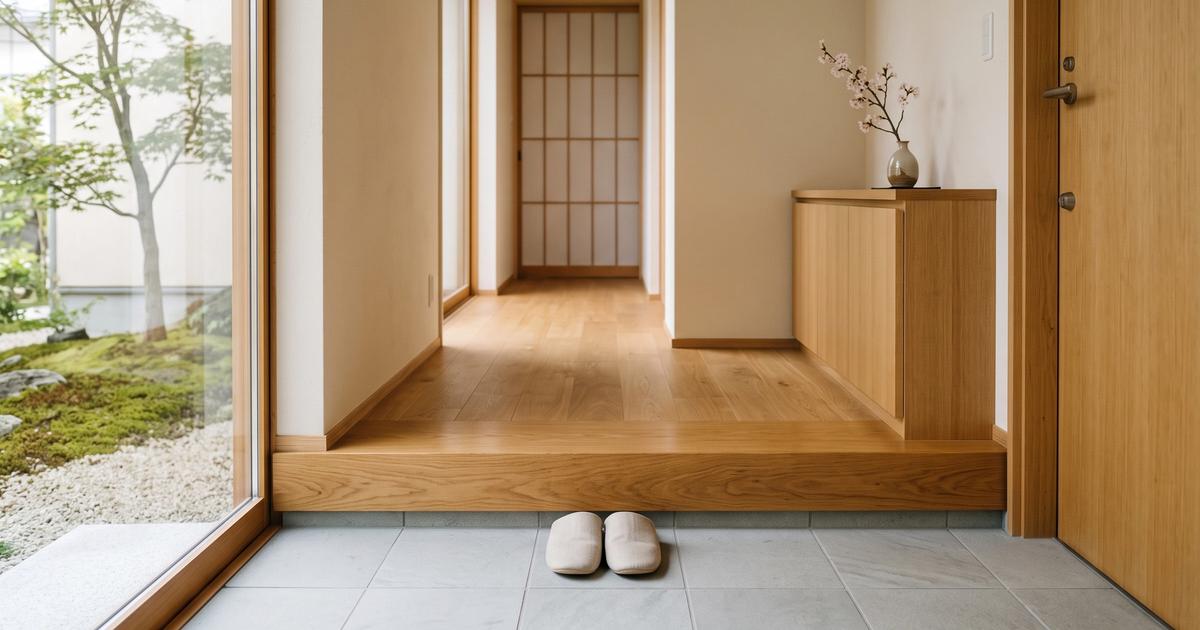
The genkan is a traditional Japanese entrance hall with a small step down at the front door, where shoes are removed to go up to the house. The physical step turns the shoes-off habit into an automatic habit instead of something to remember. Most of the dust that enters the house is dealt with at the doorstep, in combination with a short morning ritual, kadobaki, which involves sweeping the entrance track first thing in the morning before anyone tracks the dust further in. This helps to diminish the frequency of vacuuming or mopping the floors, because there is less dirt in the first place that will be picked up by the vacuum or mop and brought into the living area.
Carpet And Rugs In Wet Areas
If the bathroom rug has not stopped smelling at all after being cleaned a few times, it is likely that there is water in the padding beneath the rug and not reached by the shampoo. In Japanese homes, the wet-room-type rooms are normally without carpets and are instead floored with hard tile, wood, or woven tatami. These materials can be wiped and completely dried before the room can be truly cleaned. This same issue can be solved by replacing bath mats and small rugs around sinks with easily washable, dry-flat options, which is a good thing because thick, extra-soft bath mats and rugs last the longest when they have moisture in them.
Storage habits are a big part of that, as detailed in 6 Japanese Storage Habits For A Clutter-Free Home.
Densely Packed Closets With No Airflow
When clothes are packed tightly on a closet rail, they don't allow any air to flow between them, and so there's some residual water left in the fabric, and this over time results in a slight oily fragrance from the clothes even if they're washed well. It is very common for Japanese households to leave their closets 70% full on purpose and open the door to the closet in humid months to pass air through the rail. There are sheets of moisture-absorbing paper or charcoal sticks in a drawer to control the remaining moisture. A musty-smelling wardrobe is not a problem that can be solved by washing more or using a stronger washing detergent. There is no solution if the laundry smells musty other than increased ventilation.
Furniture Pushed Flush Against Walls
Large furniture, especially sofas, when placed directly against a wall, prevents airflow to that part of the wall, allowing moisture to accumulate during temperature changes and creating conditions for mold growth that repeated repainting cannot cure, since paint seals a mold living colony but does not remove it. Japanese houses will leave a small opening between the large furniture, and they'll have windows open on opposing sides of the room for 10 to 15 minutes each day, even during the winter, to circulate air. By making this simple change, you are tackling a common mold issue that is being treated by many homes, repainting it every year without determining the cause.
The Underlying Pattern
These five habits tackle a hidden cause of continuous mess problems, rather than simply cleaning once a week. None need expensive equipment or extensive renovations. They function by stopping the accumulation in designated and known areas instead of more frequent or more intense cleanings just to account for recurrent issues in the same areas.