Lifestyle
Seven Japanese Cooling Methods That Work Without Air Conditioning
September 12, 2026
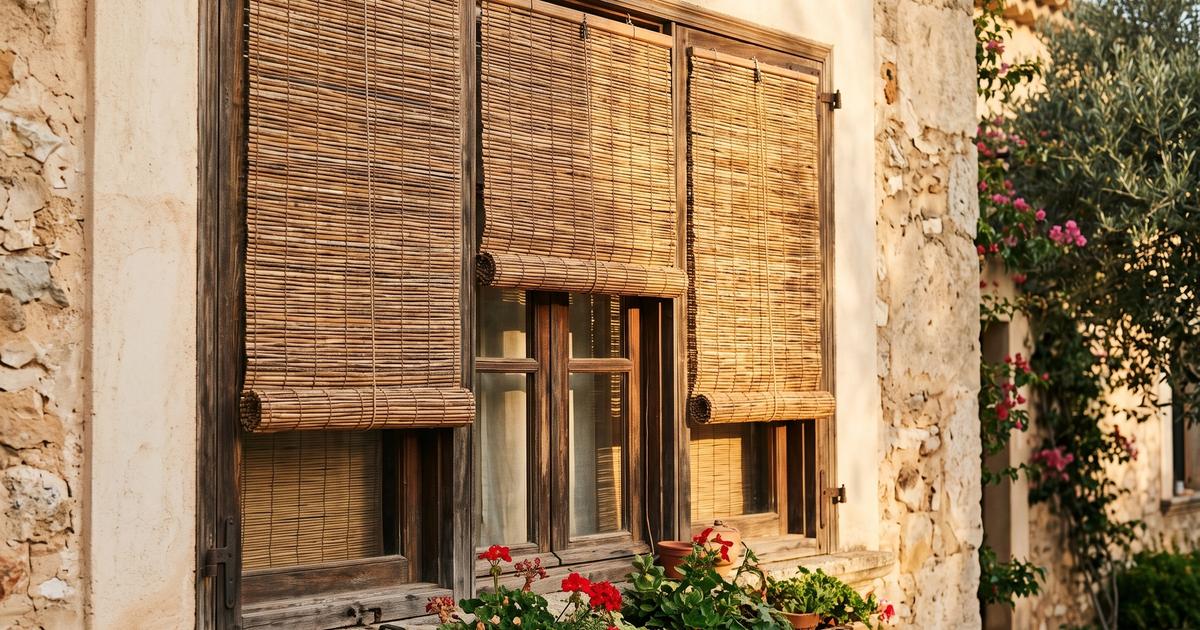
While it may seem impossible to keep cool in a hot climate without AC, there are a number of traditional Japanese techniques that use building science to lower indoor temperatures with just shade and water, air movement and timing.
Block Sunlight Before It Hits The Glass
The main cause of heat accumulation inside a room is the sun's rays passing through the window glass and changing into heat inside the room. The sun is far more effectively blocked when it's stopped before the glass, versus after it has already fallen inside. Exterior shading on a south-facing window can reduce up to 65% of the solar heat gain, while exterior shading on a west-facing window can block up to 77% of the sun. (Figures from the U.S. Department of Energy.) This is done by a traditional Japanese sudare, a roll of thin bamboo or reed slats hanging outside a window, in the same fashion as any exterior shade. There are plenty of roll-up bamboo or reed shades available at hardware stores for $20 to $40 per window and can be easily installed.
Cool The Ground Outside With Evaporation
According to a practice called uchimizu, water is sprinkled on pavement, walkways or patios around the late afternoon or evening. When water evaporates, it takes heat with it, cooling the surface that it is on and the air immediately above it; it is the same effect that makes sweat cool skin. A study in 2017 at TU Delft in the Netherlands showed the cooling effect, which seemed to be more effective when water was applied in cooler parts of the day rather than at midday when the sun evaporates the water and it has less effect. The Uchimizu project has been running in the city of Tokyo since 2003, and a temperature decrease of 1 to 1.5 degrees Celsius has been recorded on average at the event locations, and as high as 2 to 2.5 degrees in some places.
Create Cross Ventilation With Two Openings
Small, single windows are not much assistance in circulation, and incoming air has nowhere to escape, so it circulates mainly close to the window. Building science research indicates that single-sided ventilation works only to a depth of two to 2.5 times the room's ceiling height. When a second window is added on a second wall, it allows air to move through the space about 5 times farther than the ceiling height; this is called cross ventilation. This is agreed on by organisations such as CIBSE and proven by wind tunnel and simulation studies.
Use Temperature Differences To Move Air Without Wind
A phenomenon known as the stack effect can cause air to flow through a house even on a completely still day. Warm air is lighter and rises, so it escapes through a high opening on the sunnier side of the house, and that escaping warm air pulls cooler air in through a low opening on the shaded side. This is very effective in houses with a staircase, split levels or attic vents, and in traditional Japanese houses, a small shaded area inside the house, known as tsuboniwa, is created to encourage this flow of air through the cooler zone.
Choose Natural Fibres For Bedding And Floors
The temperature a room feels like depends on the type of fabric that comes in contact with the skin, besides the temperature of the air. Natural fibres such as cotton, linen and the rush grass used in traditional tatami mats are hygroscopic, absorbing moisture from the air or skin and releasing it back slowly. Synthetic fibres, such as polyester, are hydrophobic and hold sweat close to the body, resulting in a clammy feeling and discomfort. The rice straw core of a tatami floor in an 11 square metre room can absorb around 3 litres of ambient moisture. Simple swaps, like replacing polyester sheets or rugs with cotton or linen, can make a real difference in comfort and don't require a lot of money.
Use Deep Roof Overhangs To Shade Entire Walls
A characteristic of traditional Japanese houses is the deep roof eaves (noki), which extend far beyond the wall and are sized just enough to block the sun's high angle during the summer while still letting the lower winter angle in. This creates a visible temperature difference on the exterior walls, hot just beyond the shadow line and distinctly cooler just before it, and does the same "window shading" effect but along an entire wall of the house. This effect can be achieved with a retractable awning or shade cloth over south- or west-facing windows, usually without needing a permit or professional installation.
Flush the House With Night Air
One practice, called yusuzumi, is to open all the windows and doors in the evening once temperatures outside drop below temperatures inside, so all the heat that's accumulated during the day gets expelled. Before sunrise, when outdoor temperatures begin to rise above indoor ones, curtains and everything else are closed up, and for much of the following day, the night's coolness stays trapped within the building's walls and furniture. This practice is called night flushing or night purge ventilation and is particularly effective in dry climates with big day-to-night swings like Phoenix, Denver or Sacramento, but less effective in humid coastal climates where nighttime temperatures stay higher.
Combining These Methods
These 7 techniques don't need electricity, and most are inexpensive. They operate on a few shared concepts: block the solar heat before it gets in, cool the surrounding surfaces, move the air on purpose and not by chance, and open and close a house based on the outside weather rather than just habit. Beginning with the solution that solves the biggest problem, such as a west-facing window overloading a room or a bedroom that's too hot at night, is more likely to be effective than trying all seven changes at once.