Lifestyle
The Daily Habits That Keep Japanese Homes Clean Without Deep Cleaning
September 12, 2026
Most people consider cleaning to be one big tiring task, performed once a week, typically on a weekend that is meant for rest. Another approach involves breaking up the chores into small daily tasks, so nothing ever gets the chance to build up into a bigger job. This is the fundamental concept behind some of the habits that Japanese families have, which makes their homes consistently clean with much less overall effort.
Kaizen: Small Continuous Actions Instead Of One Big Cleaning Day
Kaizen (small continuous improvement) is a concept from Japanese manufacturing that directly applies to household cleaning. The basic guideline here is that any task that can be accomplished in two minutes or less is done right away, not stacked up on the "to do" list. Taking a few seconds to wipe down the stovetop immediately after cooking, running a squeegee over the shower door after taking a shower, or wiping the bathroom sink after brushing your teeth will save you many large cleanup tasks later. Cleaning up grease on a stove takes 2 minutes; scrubbing grease after a week takes 30 minutes.
Soji And Osuji: A Daily Reset And A Scheduled Deep Clean
Soji is a short (around 15 minutes) daily ritual, involving opening windows for a few minutes to get air in, making the bed immediately after waking up, wiping counters and the stovetop, a quick sweep of the kitchen and entryway, and wiping the bathroom sink. This is a quick and easy trick that means no one wakes up to the mess from the day before. Osuji is a deeper seasonal version, which breaks down larger cleaning projects such as baseboards, oven cleaning, and behind furniture into four smaller sessions throughout the year rather than one big one on a weekend. Many families also perform a larger version of osuji once a year, right before the New Year, sweeping through the entire home from top to bottom and starting the year off clean.
The Genkan: Stopping Outside Dirt At The Door
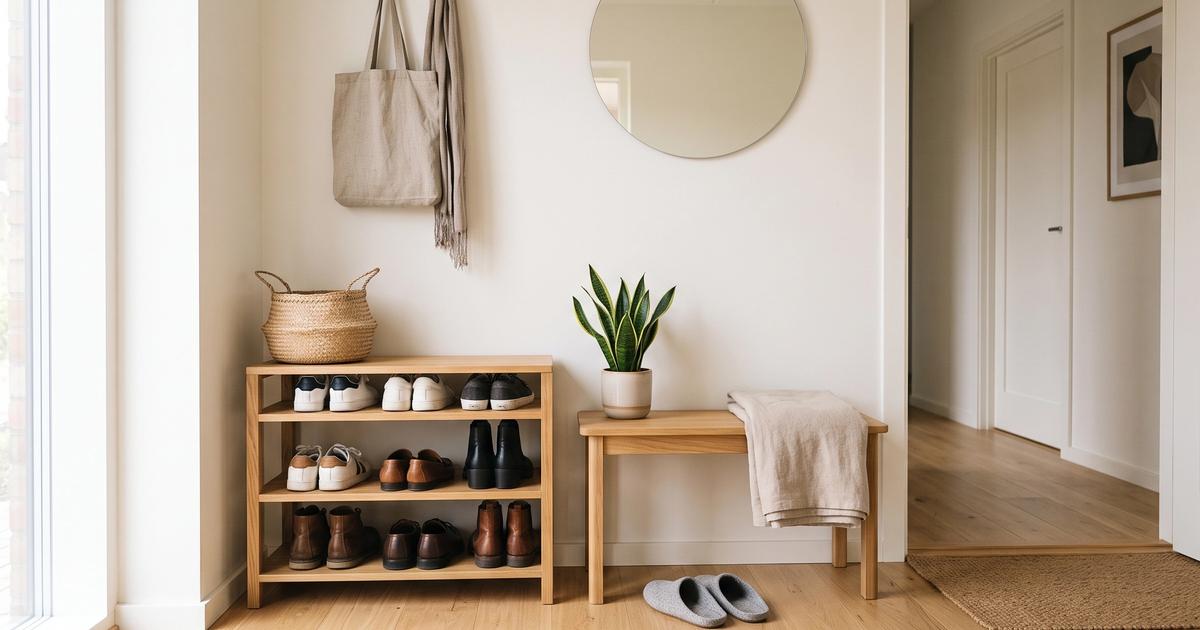
The genkan is a small space at the entrance of a traditional Japanese house where shoes are removed before going inside. This isn't just a formality; shoes worn inside can carry bacteria and dirt from parking lots, public floors, and outdoor surfaces directly onto carpeted and living areas. A shoe rack placed visibly by the front door, along with a small bench and a basket of slippers, makes the shoe-off habit easy to follow, even for guests. Applying this same principle to coats and bags, hanging them by the same door instead of leaving them on furniture, prevents further outside dirt from making its way into the house.
Danshari And Mottainai: Reducing What There Is To Clean
The practice of danshari is to refuse what isn't needed, discard what isn't used, and detach from more than what's necessary, and it's an ongoing process rather than a one-off declutter. The logic is simple enough: the more there is sitting around, the more there is to dust, organize, and manage as visual clutter every day. This is supported by a one-in, one-out rule, where something coming in is balanced by something going out. The related idea of mottainai is about respecting and maintaining what's kept rather than replacing it needlessly, which naturally leads to fewer duplicate purchases and less household clutter.
Giving Every Object One Fixed Location
Sometimes a home looks disheveled not because it's dirty, but because things are out of place. Having one fixed spot for each item, the remote in the same dish, the mail in the same tray, the scissors in the same drawer, means putting things away after use eliminates the need for a separate tidying session later. The same applies to cleaning tools themselves: a few tools kept visible and within easy reach, such as a squeegee hanging right in the shower, get used far more consistently than tools tucked out of sight.
Applying Clean-As-You-Go Habits In The Kitchen And Bathroom
In the kitchen, wiping counters while cooking, or putting ingredients away while water boils, prevents the buildup that usually follows a full cooking session. A thin strip of foil placed along the edges of the stovetop collects splatter during cooking and can simply be removed and discarded afterward. In the bathroom, using a squeegee after each shower stops soap scum and hard water deposits from building up on glass and walls, meaning far less frequent deep cleaning is needed. Cleaning the toilet bowl daily with a small brush keeps it from ever reaching a point that requires harsh chemicals to fix.
Managing Moisture And Cleaning Tool Hygiene
Leaving closet doors and bathroom corners slightly open, and wiping condensation off windows as soon as it appears, helps prevent mustiness even in an otherwise clean space. Cleaning tools also need attention: a wet sponge left sitting in a dish for weeks turns into one of the dirtiest items in a kitchen. Keeping a small stack of dishcloths that are wrung out and allowed to fully dry between uses avoids cleaning a surface with a tool that's dirtier than the surface itself.
Sharing The Responsibility
Cleaning common areas is a routine activity for all members of the household, including children, in many Japanese homes, rather than something one person handles while everyone else benefits. This distributed responsibility, combined with the daily habits above, keeps the workload from building up to the point where one person is left cleaning everything alone.
Starting Small
Not all of these habits need to be adopted at once. It's better to pick one change, like a shoe rack or a 15-minute daily soji reset, run it for a few weeks, and then add another, rather than trying several changes at the same time. A clean home doesn't come from occasional huge cleaning sessions, it comes from the buildup of several small, consistent habits.