General
How Edo Nearly Collapsed And Became A Model Of Sustainability
September 20, 2026
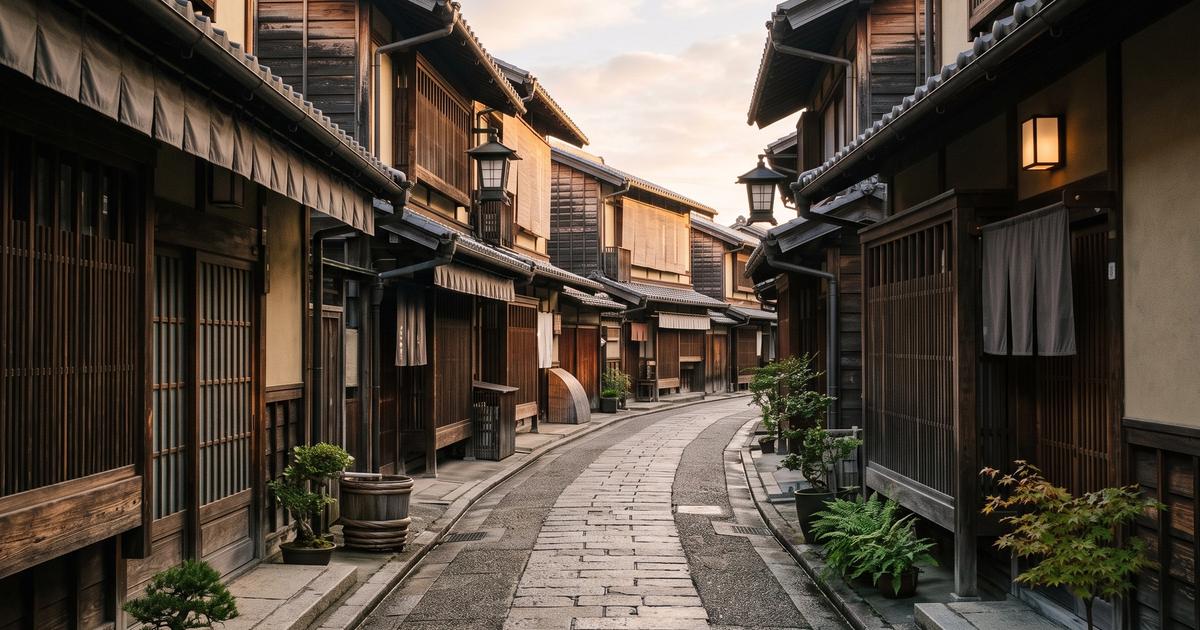
The city we now know as Tokyo had been known as Edo 400 years ago and was then one of the largest cities in the world with a population of nearly one million. Edo was in a real ecological crisis in spite of its size and affluence. For several decades the surrounding forests had been heavily logged, leaving the city short on timber, while erosion and flooding threatened the food supplies that fed its huge population. The decades that followed made Edo one of the most efficient cities in human history by the use of resources, and the techniques used are still pertinent today.
A Century Of War Led To A New System Of Control
Between 1467 and 1600, Japan was in a state of constant interwarlord warfare. The period of strife came to an end when Tokugawa Ieyasu defeated his remaining competitors and unified Japan under his rule, founding the Tokugawa shogunate, which ruled Japan from 1603 to 1867. Ieyasu and his successors, the shoguns, were wary of foreign influences in Japan and banned the majority of foreign traders and severely restricted the movement of Japanese citizens. This isolation immediately raised a practical issue—Japan had to become much more self-sufficient by producing much more internally than it consumed or wasted.
An Old Buddhist Concept Became National Policy
The strategy of the shogunate was not a new one. It was greatly inspired by the Buddhist idea of mottainai, which means not to waste and to be content with the right amount or just the right amount. After the shoguns realized just how much deforestation was hurting the area around Edo, they enacted regulations against logging and also launched a massive reforestation project. Earlier, decades of unchecked logging had destroyed what villagers needed to be replenished, and planting was required and subsequently formalized and paid for to restore the trees. The government tried to minimize the continuous demand for new timber by implementing strict material rationing and enforcing the use of wooden components with pre-designed criteria for reuse when a structure ceased to be needed.
Entire Industries Formed Around Eliminating Waste
As these policies gained traction, whole industries emerged that were designed to utilize materials that were discarded. Rice straw, among other agricultural waste materials, was not wasted after harvest but used to make rope and packaging materials. The melted candle wax from dipping was collected and used to remold new candles. Skilled artisans were employed to mend broken umbrellas and sandals, and even human excrement was carefully gathered and converted into fertilizer for farming.
This attitude also permeated individual homes. Kimonos were mended at all times for as long as they could be, and if worn, the cloth was not thrown out. It was instead repurposed to be used as coverings for futons, later to be cut down into diapers or cleaning cloths, and eventually burned for fuel when it had no other uses. The repaired items were repaired with the use of kintsugi; broken pieces were restored, and the repair lines were enhanced with the use of gold lacquer to make the repaired object more beautiful than the original. A similar custom was called boro, where bits of old cloth were used to make a patchwork, and the family would keep using it for many generations before discarding it for new cloth.
Culture Flourished Alongside These Practical Reforms
Edo saw important cultural development at the same time that these resource-saving policies were being devised. During these years, poetry, theater, and literature flourished; Chinese Confucian philosophy was also studied, and European scientific writings were read, while the shogunate was highly suspicious of the "foreign powers" that were creating that scientific knowledge. This strict resource discipline and abundant cultural output yielded a city that could be both materially efficient and creatively productive at the same time.
This System Existed Alongside Real Inequality
All of this sustainability had its share of costs to the social side as well. During the Tokugawa period the government was extremely autocratic, and Japan was a feudal society with considerable social stratification. Most of the peasants were taxed by the regional feudal lords (daimyo) on a "rice-based tax" (nengu), which could be devastating in a year of poor harvests. Inflation started to erode the broader Japanese economy in the second half of the 19th century, and mounting pressure including military pressure from the United States culminated in Japan's willingness to open up to foreign trade. Along with this change came the end of the Tokugawa shogunate's nearly 250-year reign.
What This Period Still Teaches Us
Even if it has quite a few major problems, the shift in Edo from a place on the verge of ecological catastrophe to a viable resource-efficient model is a lesson that can be learned. It shows that the damage to the environment does not need to be irreversible and that a community with actual resource limitations can reorganize their production, consumption, and repair processes, rather than exhaust resources. It is particularly apt for times now: Today, only some 7 percent of the global economy is circular, that is, using materials more than once, repairing and repurposing them instead of discarding them after the initial use. The case study of Edo is a real historical case that an economy based on maximizing resources, not on constant new consumption, is not only possible but has actually happened. For over 200 years, it has been accomplished on a global city scale.