General
The Real Science Behind How Fireflies Actually Glow
Written by Fatima Batool
September 26, 2026
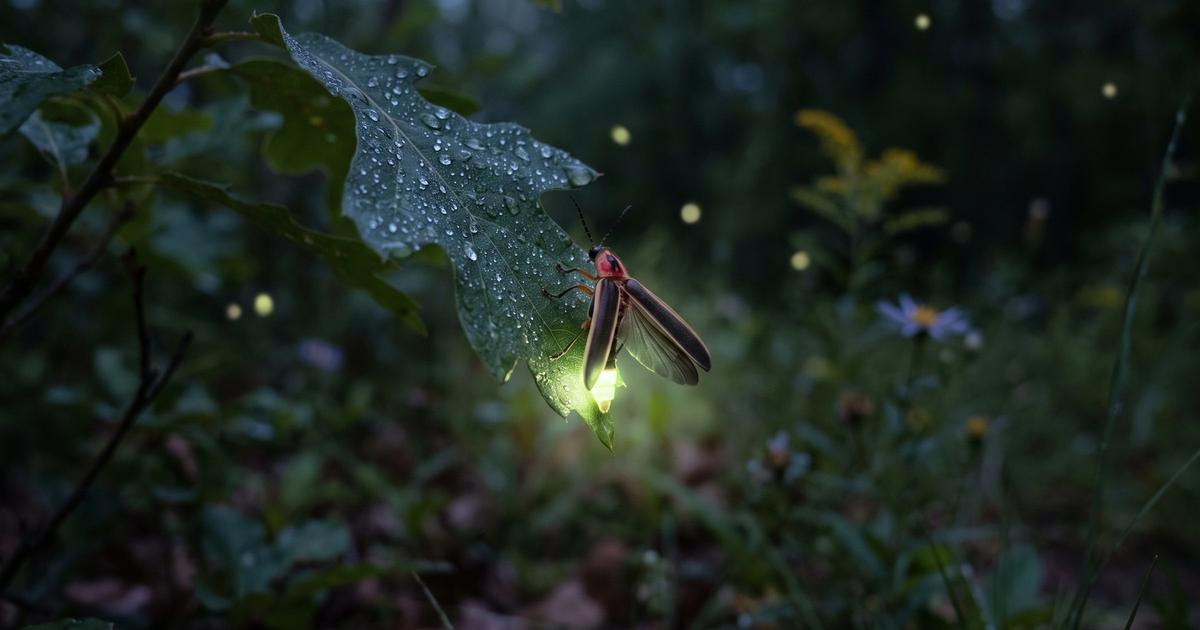
Fireflies have been illuminating nighttime skies for an extremely long time: the earliest known firefly is thought to have lived more than 100 million years ago. There are approximately 2,000 known firefly species, found in forests, grasslands, marshes, and even deserts around the world. All of these species emit light in one way or another during their lives, and the chemical reaction involved in producing that light is the common thread connecting them.
The Enzyme and Molecule Behind Every Glow
The light is produced by an enzyme called luciferase and a molecule called luciferin. Luciferin reacts with oxygen in the presence of luciferase and produces light. This reaction isn't accompanied by any real heat, so firefly light feels cool to the touch, with almost no wasted energy the way an incandescent bulb wastes energy as heat.
Why Fireflies Glow In The First Place
Many firefly species also contain toxic chemicals called lucibufagins that deter predators by making them taste bad, and some of these chemicals are even poisonous to other animals. Because of this, researchers believe the glow first evolved as a predator warning signal, rather than starting out as a way to attract mates.
How Firefly Light Changes Across Their Life Cycle
Larvae Are Predators Long Before They Glow for Romance
Adult fireflies have a short lifespan of only a few weeks, but most of their life is actually spent as larvae. At this larval stage, many species are surprisingly effective predators, capable of paralyzing prey with venom and liquefying it externally with saliva before consuming it. Larvae glow when disturbed even at this early stage, suggesting the defensive function of firefly light may have developed long before any mating function existed.
Adulthood Shifts the Purpose of the Glow
Once fireflies mature into adults, the light continues serving as a defense against predators but also becomes a major signal for attracting mates in most species. This isn't true across the board, though. In some species, known as dark fireflies, mating happens during the day rather than at night, and mates are located through pheromones instead of light, since a glow would be far more noticeable, and risky, to predators in daylight.
Chemical reactions inside living things are often stranger than fiction, as seen in Why Raw Cookie Dough Is Riskier Than Most People Think.
The Mating Display: A Conversation Written in Light
How Courtship Typically Unfolds
In light-dependent species, the typical pattern involves males flying and flashing repeatedly while females remain stationary, watching for a signal that appeals to them. The differences in light color between species come down to small variations in the structure of the luciferase enzyme itself, rather than any external filter or pigment. Flash patterns also vary significantly between species, ranging from rapid flickering to longer, sustained glows.
Synchronized Flashing In Large Groups
In some species, when enough males gather in one location, their individual flashes gradually synchronize into a coordinated display. Researchers believe this synchronization helps reduce visual confusion for females, making it easier to track a single male's signal rather than trying to parse the competing flashes of many males at once.
What Females Are Actually Looking For
Female preferences vary considerably between species. In one studied species, females favor rapid, vigorous flickering, while in another, an entirely different sustained flickering pattern is preferred instead. Female courtship responses tend to be far simpler than male displays, typically involving a female signaling a chosen male in a way that draws him closer. If the pairing succeeds, the two remain physically joined at the abdomen and mate for several hours.
When The Glow Becomes A Trap Instead Of An Invitation
The Predatory Females Known As Femme Fatales
Not every firefly encounter is peaceful. Most adult fireflies don't eat at all, relying instead on energy reserves built up during the larval stage to sustain their brief adult lives. Females of one particular genus, informally called femme fatales, are an exception. These females actively hunt and eat adult males from entirely different firefly species. Despite being larger than their prey, femme fatale females lure unsuspecting males by mimicking the exact courtship flash pattern used by females of that other species. When a male approaches expecting to mate, he's attacked and eaten instead.
Why They Hunt Beyond Simple Nutrition
This predatory behavior serves a purpose beyond food. Femme fatale fireflies don't naturally produce the toxic lucibufagins found in many other firefly species, but they acquire these toxins by consuming males that already carry them. This is a form of protection against her own predators, gained by consuming males who already carry these toxins naturally.
Male Fireflies Have Developed Countermeasures
Males aren't entirely defenseless against this deception. Males have been observed approaching femme fatale females with visible caution, sometimes dropping several centimeters suddenly to evade an attack mid-approach. Research estimates fewer than 10 percent of femme fatale hunting attempts actually succeed, suggesting males have developed genuine behavioral defenses against this specific predation strategy over time.
An Even Stranger Deception Involving Another Predator Entirely
Fireflies also face manipulation from outside their own species entirely. In parts of China, certain orb-weaver spider species wrap captured fireflies in their webs and keep them alive as bait to lure in more prey. In an unusual twist, these spiders appear to prompt trapped males into producing a flash pattern resembling a female's, effectively turning a captured male into an unwitting decoy that draws in other searching males looking for a mate.
Why This Small Insect Behavior Says Something Bigger
Every time I read about deception this precise happening inside something as small and seemingly mechanical as an insect, it genuinely makes me reconsider the line between instinct and intention in nature. A firefly's flash, on or off, attracting or repelling, seems like it should be a simple, almost automatic response, but the reality involves layered defensive chemistry, species-specific timing patterns, and in some cases, predators actively exploiting the very same signaling system. The femme fatale strategy stands out in particular because it shows evolution solving two entirely different survival problems, avoiding predators and finding food, using the same borrowed signal a firefly originally evolved to attract a mate.
Even something as ordinary as a firefly glowing in a backyard turns out to run on a genuinely intricate system once you understand the actual chemistry and behavior behind it. What looks like a peaceful, romantic display in a summer field is really a biochemical and behavioral contest involving toxins, mimicry, predation risk, and split-second decisions, a pattern of light most people never think twice about.