General
The Surprisingly Recent History Of The Passport
Written by Fatima Batool
August 28, 2026
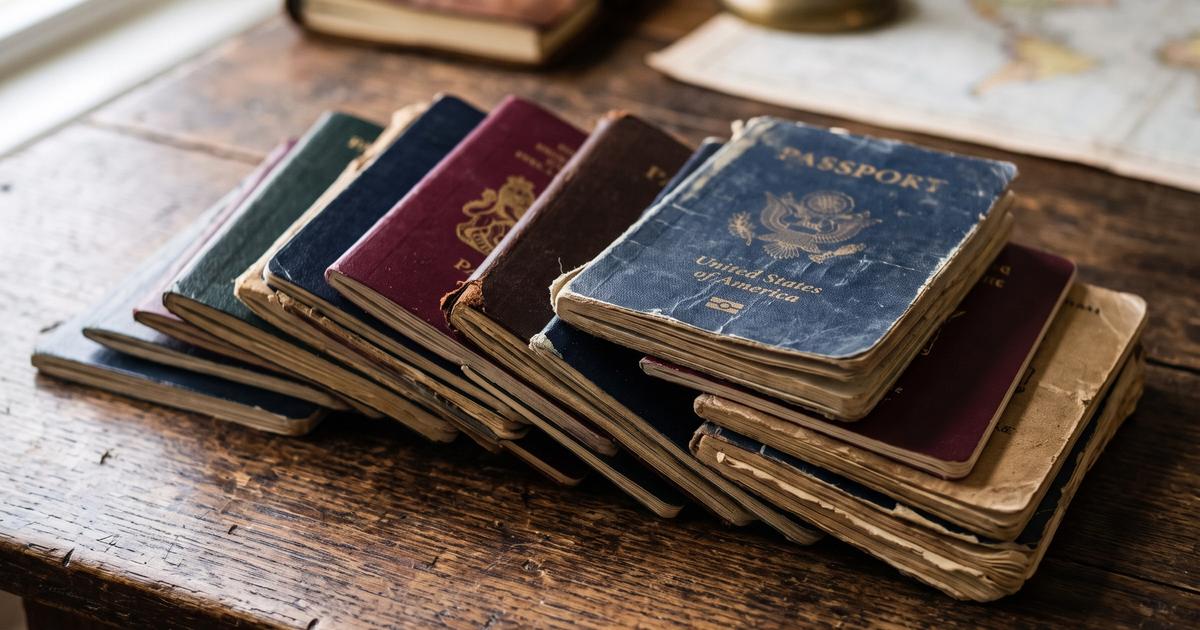
Passports seem to be an integral part of the international travelling experience, but they are a relatively new phenomenon, and the system in place today was not intentionally created. It was a wartime transitory measure, so governments just never got rid of it.
Travel Documents Existed Long Before Passports
There were different types of travel documents even before the advent of modern passports. The rulers of the ancient Egyptians issued letters of safe conduct for their travellers. Foreigners were issued with travel documents by the Han Chinese and Tudor English. During the 1800s, many poorer immigrants to the United States were forced to have to carry a health certificate. In most parts of history, however, borders were not so rigid, and standard travel documents were not used.
World War I Changed Everything
When World War I began in 1914, the other countries were quickly transformed into rivals during a time of war. Many European countries set up border stations at which travellers were asked to verify their nationality to guard against espionage and desertion. At this time, there was no uniform system of passports, and there were many different versions according to the country.
A Temporary Measure That Became Permanent
At the end of the war, it was hoped that the passport requirements would be abolished altogether. This question was directly debated in the League of Nations in 1920. They did not want to do away with the system, but rather, due to security, disease and refugee control concerns, they did leave passports in place for a temporary period, and they did urge countries to consider typical booklet formats using the language of the issuing country and French. The countries still have the sole right to establish their own visa regulations and conditions of entry. By the time the League of Nations came back to the topic in 1926, interest in removing passports had waned, and the system in place today was sealed.
Language has a similarly messy origin story, explained in Why Is English Spelling So Confusing? The Real History Explained.
Passports Became Tools Of Control, Not Just Documentation
Passports were also employed to enforce political and colonial hierarchies and differences beyond travel. For instance, British subjects born in the United Kingdom were issued standard British passports while those born in India were issued British Indian passports, thus establishing an official record of difference. Passports also have been confiscated as a political punishment by the government. In the Cold War era, the U.S. government revoked the passports of some of the country's political and civil rights activists, preventing them from travelling overseas.
Modern Passport Access Is Highly Unequal
Over the second half of the twentieth century, as international travel monitoring got into air ports and electronic monitoring tools improved, governments were able to monitor and control individuals more than ever before. Today, the strength of a passport is greatly determined by the diplomatic relationship between the two countries. This is influenced by regional agreements, including the Schengen Agreement, which enables borderless travel among 29 European states. A Pakistani can travel to less than 40 countries visa-free as of 2025, while a United States passport holder can travel to about 180 countries visa-free. The success rates for visa applications also differ by nationality, with the US visa success rate for Algerian nationals being significantly different in 2024 compared to that of Brazilians.
Citizenship Can Also Be Purchased
Golden passport laws are now in effect in over a dozen countries including this one which allow citizens to be acquired by the financial donation or investment of a minimum amount. This further compounds an already imbalanced system, where access to global mobility boils down to where a person is born or how much he or she can afford.
A System Built By Default, Not Design
The modern passport system was not the outcome of a worldwide planning decision concerning travel. This continued because there has never been a formal repeal of the temporary wartime legislation, and it has since become a system that gives vastly different freedom and access depending on the country whose passport a person has.