General
Why Airplane Boarding Takes So Long And What Actually Speeds It Up
Written by Fatima Batool
August 23, 2026
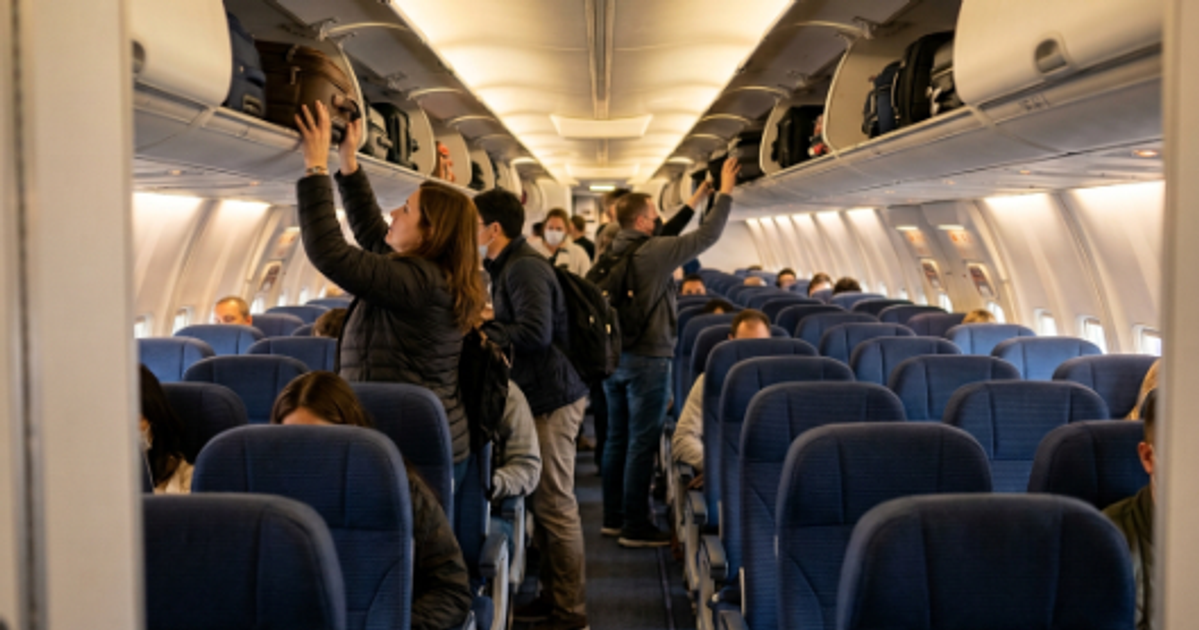
The time of a commercial flight is not as quick as it could be, and mathematicians have been working for years to understand why. Most of the time lag is caused by two issues. The first is seat interference, where a passenger that has a window seat must wait for the person in their row to get out so they can get in. The second is aisle interference, which occurs when passengers in front of the aircraft block the aisles as they are packing or unpacking the luggage, which slows down everyone else at the rear of the aircraft.
The Standard Approach Barely Helps
Most airlines plan to have passengers board from the back of the aircraft to the front, giving them a chance to board without walking through passengers already seated. But it makes sense, and computer simulations of a 156-passenger Airbus A320 with all passengers with luggage suggest that this approach will take about 23 minutes, which is just a little quicker than the normal front-to-back boarding. This is because the problem of aisle interference does not seem to be solved too much by boarding from the back, because they are still getting crammed together in the same number of aisles as people board the bags at the same time.
Random Seating Cuts Time But Creates New Problems
Some airlines will not assign seats at all and will simply try to get the passengers to sit as far apart as possible. This cuts a couple of minutes off the total boarding time for the same simulation but adds its own slowdown towards the end of boarding when, after everyone is sitting, people look around for the free seats. Also, it tends to disperse groups of passengers, as the later ones may not have seats that are close to one another.
Window Middle Aisle Ordering Performs Better
A policy of "first through middle, then aisle" will minimize this "seat interference" effect because no one will have to get up to allow someone to pass. This results in a remarkably reduced A320 boarding time of approximately 16.5 minutes, which is a substantial improvement over back-to-front boarding.
Systems designed for efficiency often fail for human reasons, as seen in Six Disasters That Happened Because Of One Preventable Mistake.
The Fastest Known Method Still Isn't Used
Astrophysicist Jason Steffen ran extensive simulations to determine the fastest possible boarding order and created what's now known as the Steffen method, which can board the same A320 in approximately 15 minutes. It is a combination of window-to-aisle order with a staggered back-to-front pattern, as it is in the first half of the rows, and then in the second half of the rows, it is from back to front. This staggered load allows each passenger to load his luggage while not blocking the other.
The problem with Steffen's method is that it takes flawless execution. All passengers must be present at the gate, stand in their assigned boarding spot, and be ready to board without family members. However, with a general population on board, this degree of coordination is difficult to enforce, and that is one reason why airlines have yet to opt for it in scenarios.
A Historical Example of Extreme Efficiency
Even in the early 70s, Southwest Airlines operated an aircraft turnaround system that allowed the aircraft to land, unload completely, load a new flight, and push back from the gate in less than 10 minutes. As soon as the aircraft landed, it was already being unloaded into the aisle, while new passengers formed a line on the tarmac, waiting to get on board. The plane was taxiing towards the runway while some passengers were still settling into their seats. This type of process would not be acceptable in today's aviation safety and security environment but shows what boarding speed may be possible optimally.
Engineering Changes Could Also Help
Physical aircraft design changes have been suggested in addition to the change in the boarding order. Airlines could benefit from a 240-seat aircraft having two doors to load the passengers, cutting the boarding time by about five minutes. The other idea is the “side slip” seat where the middle seat is angled to the side, allowing the aisle seat to shift over it and temporarily increase the width of the aisle, which could reduce boarding time by up to 20 percent.
Why Airlines Aren't Rushing To Fix This
Under best possible boarding conditions, only about 10 minutes of time can Under optimal boarding conditions, existing techniques can save only about 10 minutes., compared with existing techniques. On the other hand, the slower boarding would generate a demand for the premium boarding that passengers would pay more for, which would increase the operational costs of the airlines while decreasing their ground time. There is limited financial incentive for airlines to eliminate a frustration that also functions as a revenue source.