General
Six Ancient Structures Still Working Exactly As Designed
Written by Fatima Batool
September 4, 2026
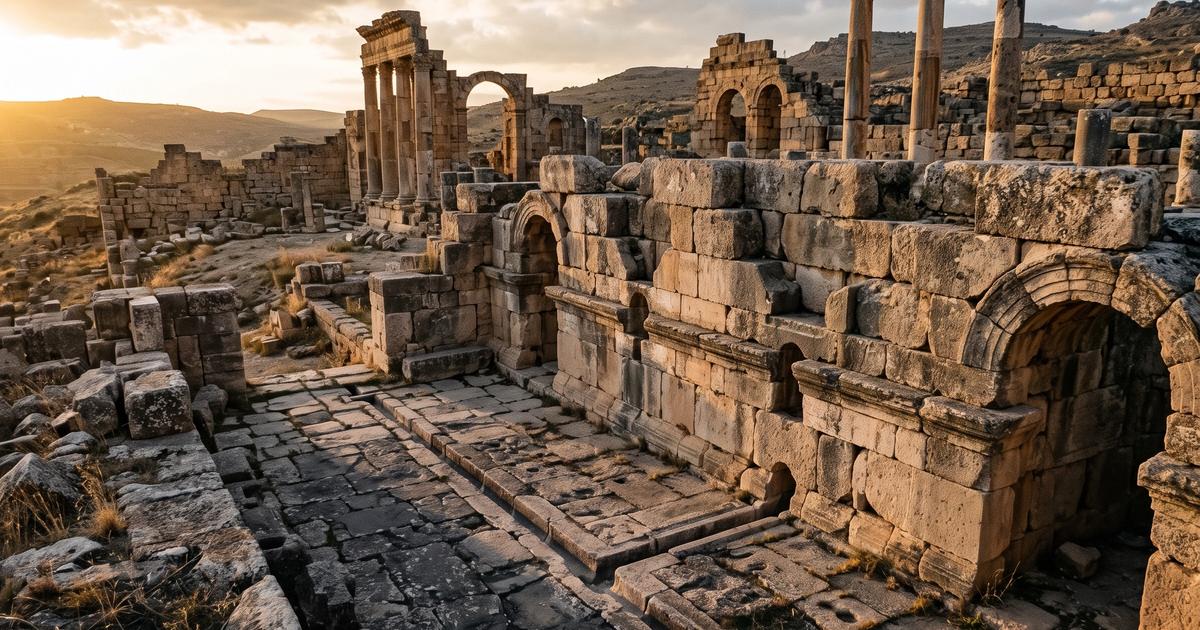
The majority of infrastructure is engineered for a lifespan of many years. A few of the ancient projects were constructed so well they are still performing the functions for which they were intended today, thousands of years after the civilizations that created them vanished.
The Pantheon's Dome Has No Steel Reinforcement
The Roman Pantheon, built around 125 CE, has the largest unreinforced concrete dome ever constructed, and no engineer has ever been able to make an unreinforced dome of this size since. The concrete used by the Romans was made by incorporating volcanic ash, which with time adds to the strength of the concrete rather than diminishes it, unlike modern concrete. It has been the Catholic Church since 609 CE.
A Roman Seawall Gets Stronger in Saltwater
Around 2000 years ago, the Roman concrete was used by King Herod to construct a massive port in Caesarea (Israel), and parts of the wall are still visible in the Mediterranean. They have found out why: seawater causes a chemical reaction in Roman concrete that produces interlocking mineral crystals, which harden the concrete over time. The difference in durability is particularly evident with the standard modern concrete that starts deteriorating in salt water within about 50 years.
Stonehenge Still Tracks The Solstices With Precision
The monument was erected about 4,500 years ago to mark the summer solstice (longest day) rising over the heel stone and passing directly through the middle of the monument, and the winter solstice (shortest day) setting over the heel stone. This alignment is still exactly true today, astronomers have confirmed. Whatever other signs or symbols it might have carried out, its use as a solar calendar has not changed since its original creation in the Bronze Age.
Ancient societies managed resources with similar foresight, as covered in How Edo Nearly Collapsed And Became A Model Of Sustainability.
A Chinese Flood Control System Uses No Moving Parts
A Chinese engineer has constructed an artificial island called the Fish Mouth for the Min River in 256 BCE to divide the river into two channels: one for irrigation and one for flood control. This is a system that uses the geometry of the island as the basis of its operation in the event of a flood, water levels rise, and the shape of the structure automatically redirects excess water into the flood channel. This is the manner in which it has persisted for over two thousand years.
A Neolithic Monument Aligns With The Sun To The Minute
Newgrange is a large stone mound with a small entrance area known as a roof box, which was built in Ireland approximately 5000 years ago. Each year on the winter solstice, the sun shines through the exact window and into the inner chamber for 17 minutes. The estimated 200,000-ton structure has never needed to be adjusted to keep this precise alignment through five millennia.
An 8th Century Japanese Storehouse Uses Passive Climate Control
The Shosoin Repository was built in 756 CE to hold an emperor's possessions and uses triangular wooden logs that swell in damp weather to close the building and recede in dry weather to ventilate it. There is no mechanical climate control, and the humidity regulation system has kept approximately 9,000 ancient objects in excellent condition for more than 1,000 years.
What These Structures Have In Common
All six projects function through a process that seeks to integrate with natural physical forces and processes instead of against them. The Roman concrete is strengthened by a continuous chemical reaction with its surroundings, rather than by them. Instead of mechanical components, the fish mouth relies on the geometry of the rivers. The wooden storehouse uses material expansion to control itself, instead of active climate control. The solution of a problem through the use of natural forces has been a common thread in the answer to why these structures survived the degradation of the empires that created them.